The Best Days Out from Durham
Durham sits within easy reach of some of the North East's finest days out. Our guide to the castles, museums, waterfalls, forests and coastline within a short drive of the city, from Beamish and Raby to High Force and the Heritage Coast.
Durham makes a fine base. The cathedral city has plenty to fill a visit on its own, but it also sits at the heart of a county rich in castles, museums, woodland and dramatic coast, most of it within half an hour or so by road. This guide rounds up the best days out within easy reach, from a living museum and a medieval castle to one of England's most powerful waterfalls and a coastline famous for its sea glass. Prices and opening times change, so treat the figures here as a guide and check each attraction's own website before you set off.
Beamish, the living museum
Just a few miles north-west of Durham, Beamish is one of the North East's great days out. It is a huge open-air museum where whole streets, farms and a colliery have been rebuilt and brought to life by costumed staff, vintage trams and the smell of a coal fire, recreating life across the 1820s, 1900s, 1940s and 1950s. Standard admission is the Beamish Unlimited Pass, which lets you return free for a whole year, and at the time of writing adult entry was around £35 (check beamish.org.uk for current prices). It is easily a full day, and there is no direct bus from the city, so most visitors drive or change at Chester-le-Street. For the full picture, see our Beamish visitor's guide.
Adventure Valley
Closer still, a short drive north of the city at Brasside, Adventure Valley is County Durham's biggest family farm and adventure park. It combines outdoor rides and animals with indoor soft play, which makes it a reliable choice whatever the weather and a firm favourite with younger children. Our Adventure Valley guide has the detail on what to expect and how to get there.
The Bowes Museum
About twenty-five minutes south-west at Barnard Castle, the Bowes Museum is an extraordinary sight: a vast, purpose-built French chateau standing in a small County Durham market town. Inside is an internationally important collection of fine and decorative art, but the star turn is the Silver Swan, a life-size eighteenth-century musical automaton that preens and appears to catch a fish. It is demonstrated daily, usually at 2pm, and is worth timing your visit around. The museum opens daily, and at the time of writing adult admission was £20, with under-18s, full-time students and carers free.
Raby Castle
A little nearer, near Staindrop, Raby is one of England's finest medieval castles, complete with a 200-acre deer park grazed by red and fallow deer. Recent years have brought a major redevelopment known as the Rising, which has opened up a beautifully remodelled walled garden, a new visitor hub and café in the former coach houses, and the Plotters' Forest, a large adventure playground themed on the 1569 Rising of the North (open weekends and holidays, best pre-booked). The castle itself opens seasonally, roughly spring to autumn, while the gardens and deer park open more widely. At the time of writing a combined castle, park and gardens ticket was around £24, with a cheaper gardens-only option, so check raby.co.uk for the ticket that suits your day.
The Auckland Project
At Bishop Auckland, about twenty minutes south-west, the former palace of the Prince Bishops of Durham has been transformed into a cluster of attractions known as the Auckland Project. Auckland Palace and its walled gardens sit alongside the Spanish Gallery, the only gallery in Britain devoted to Spanish Golden Age art (with works by Zurbarán), and the Faith Museum, which opened in 2023 in a Grade I listed wing. Auckland Tower, a striking viewing tower on the market place, and the deer park are free to visit. The paid attractions typically open Wednesday to Sunday and bank holiday Mondays, and an annual Bishop's Key pass covering everything was around £30 at the time of writing. The site is also home to Kynren, a spectacular open-air live show telling the story of England, which runs on selected summer evenings and is ticketed separately.
Hamsterley Forest
For a day in the open air, Hamsterley Forest is County Durham's largest woodland, roughly forty minutes south-west towards Weardale. Managed by Forestry England, it has waymarked walking trails, an extensive network of cycling and mountain-bike routes, riverside picnic spots, a visitor centre and a café. Parking is pay-on-exit by number-plate recognition, so keep some card handy; charges rise on the busiest bank-holiday weekends. It is free to wander, dawn to dusk, all year round.
High Force and Low Force
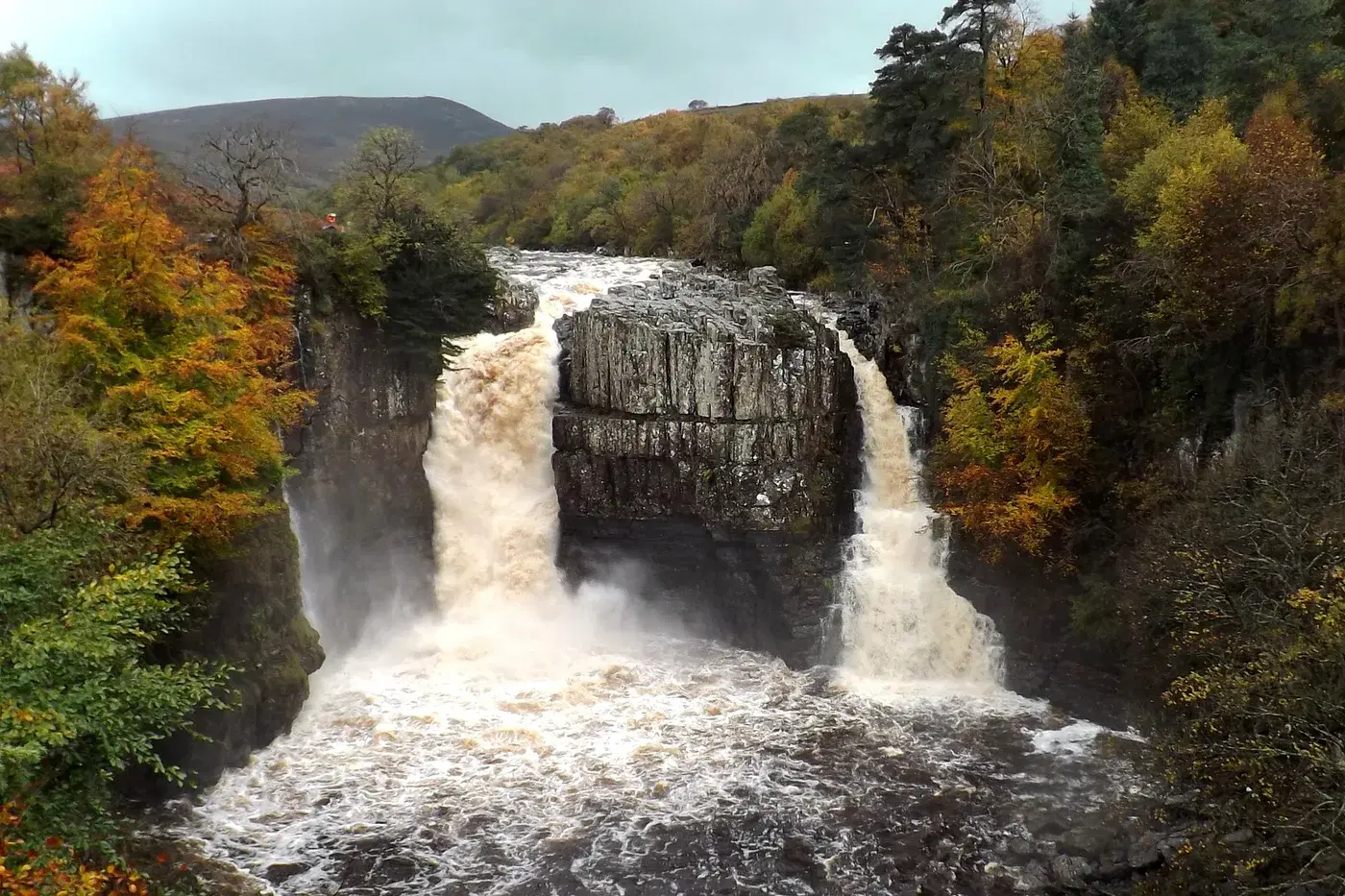
Further west, in Upper Teesdale, the River Tees puts on the finest show in the county. High Force is one of England's most powerful waterfalls, where the whole river plunges around twenty-one metres over the hard rock of the Whin Sill in a single dramatic drop. A short distance downstream, Low Force is a gentler series of falls beside the Wynch Bridge on the Pennine Way. High Force is reached by a woodland path from the pay-and-display car park at the High Force Hotel, while Low Force is an easy walk from the Bowlees Visitor Centre; the riverside path between the two is a lovely stretch of the Pennine Way. It is around three-quarters of an hour from the city, and worth the drive, especially after heavy rain when the falls are in full spate.
The Durham Heritage Coast
Twenty-five minutes east lies a coastline transformed. Once black with colliery spoil, the stretch from Seaham south to Crimdon is now a designated Heritage Coast of cliffs, dunes and reborn beaches. Seaham is one of the best places in the country to hunt for sea glass, the tumbled, frosted remains of the town's Victorian bottle works, and its seafront is watched over by "Tommy", Ray Lonsdale's striking corten-steel statue of a First World War soldier. South of the town, the clifftop viewpoint at Nose's Point looks down over Blast Beach, while Crimdon, at the southern end of the coastal path, has dunes and a little tern colony. The coast is free and open all year, a bracing contrast to the city.
Finchale Priory
If you would rather not travel far, the ruins of Finchale Priory sit in a wooded loop of the River Wear only a few miles north of the city. This thirteenth-century Benedictine priory grew up on the spot where the hermit St Godric retreated to live, and its picturesque riverside setting makes it an easy half-day out or the turning point of a longer riverside walk from Durham. Entry to the ruins is free, though the on-site car park is charged separately. See our best walks in and around Durham for the walking route along the Wear.
A few more ideas
The county has more besides. At Shildon, Locomotion is the Science Museum Group's free railway museum, a natural pairing with a day at Bishop Auckland and a treat for anyone interested in the birthplace of the railways. High in Weardale, Killhope, the North of England Lead Mining Museum, restores a Victorian lead mine complete with a huge working waterwheel; it is beautiful but remote and opens seasonally, so check before you go. And the broader Durham Dales, the upland landscapes of Weardale and Teesdale, reward a slower day of driving, walking and stopping in market towns like Stanhope and Barnard Castle.
Making the most of it
Any of these pairs well with time in the city itself. Combine a day out with our guides to things to do in Durham and a weekend in Durham, and see getting around Durham if you are planning without a car. With a little forward planning, Durham is one of the best-placed cities in the North for a run of memorable days out.
Never miss what’s on
Join the weekly Durhamcity.live digest — the best events, news and local tips, straight to your inbox. Free, one email a week.
What's On
John Kearns: Tilting At Windmills
7:30 PM · Gala Theatre, Millennium Place, Durham, DH1 1WA
Colpitts Poetry Live: Donald Jenkins and Patience Ezinwoke
7:00 PM - 9:30 PM · Redhills, Durham Miners' Hall, Flass Street, Durham, DH1 4BE
Durham Jazz Festival 2026
See booking, performance times vary · Venues across Durham city centre, including the Gala Theatre, Millennium Place, Durham, DH1 1WA