Historic Trades and Crafts of Durham
Durham gave the world its famous mustard, built organs for Westminster Abbey and wove carpets by the Wear. A guide to the city's historic trades and crafts.
Durham is best known for its cathedral and university, but the city has a rich industrial and craft heritage of its own. From the fiery mustard that carried its name to the King's table, to world-famous organ builders and a century of carpet weaving by the river, Durham's makers left their mark far beyond the peninsula. Here is a guide to the historic trades and crafts of Durham.
Durham Mustard
Perhaps the city's most surprising claim to fame is mustard. In 1720 a Mrs Clements of Durham developed England's first smooth mustard flour, milling the seed repeatedly to a fine powder much as flour is made from wheat, which produced a far more pungent and powerful condiment than the coarse mustards of the day. She travelled the country taking orders, and after her mustard reached the table of King George I, "Durham Mustard" became the fashionable choice across the land. The name endures, and mustard-making has more recently been revived in the city.
Best for: Best remembered as the birthplace of smooth English mustard.
Harrison & Harrison, organ builders
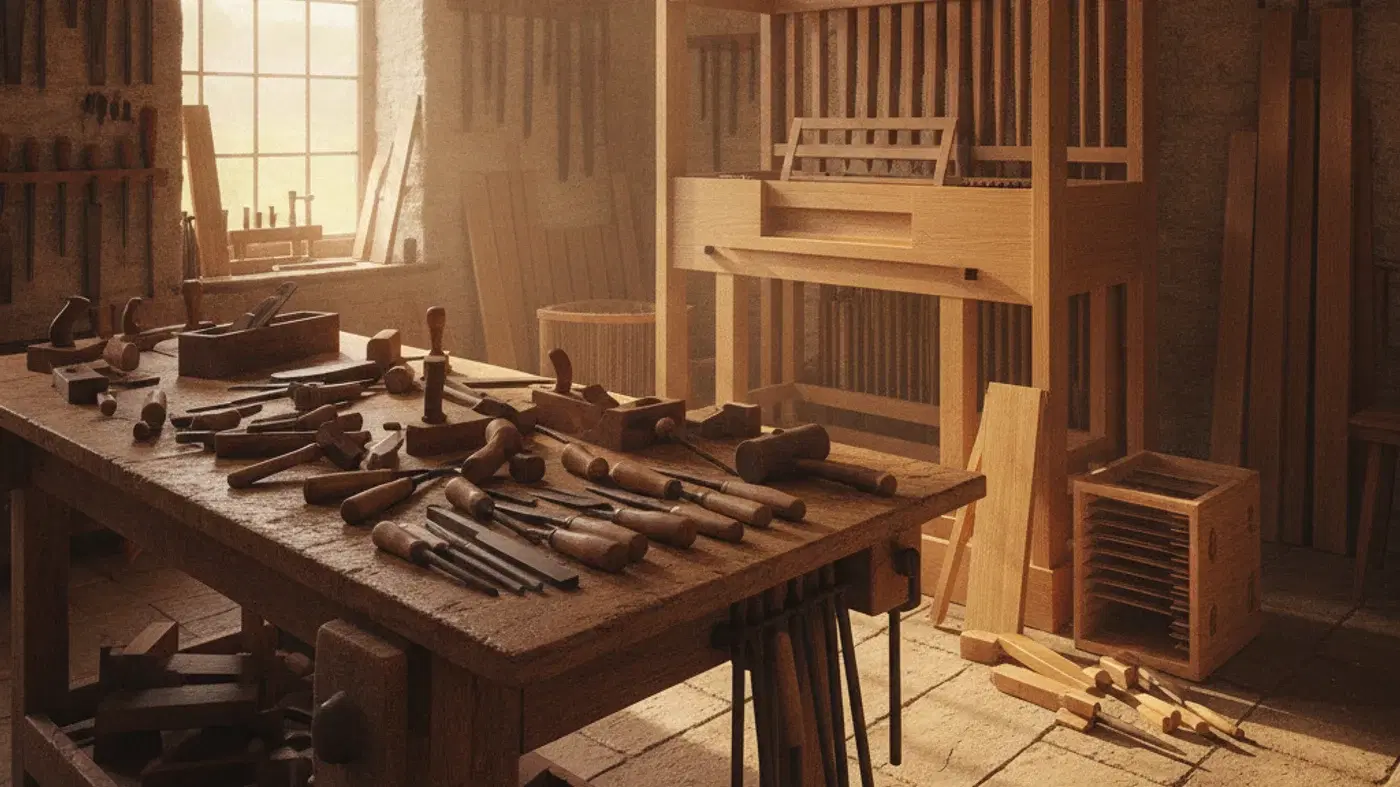
Durham is home to one of the world's great organ-building firms. Harrison & Harrison, founded in 1861, moved to Durham in 1872 and has built and restored some of the most famous pipe organs anywhere, including those at King's College, Cambridge, Westminster Abbey and London's Royal Festival Hall. Still very much in business, the firm moved to a purpose-built workshop on the edge of the city in 1996, continuing a craft that has carried Durham's name into the great concert halls and cathedrals of the world.
Best for: Best known for building organs for Westminster Abbey and King's College.
Carpet weaving by the Wear
For much of the twentieth century Durham was a carpet-making city. Hugh Mackay began weaving in Durham in 1903, installing eleven looms in a disused factory to keep the craft alive, and the firm grew into one of the best-known names in British carpets, moving from its riverside works to a larger site at Dragonville in 1970 to expand production of Axminster carpets. The Durham factory has since closed, but the Hugh Mackay name lives on in the trade, a reminder of an industry that once employed generations of local families.
Best for: Best remembered as a century-long home of British carpet weaving.
Stone, coal and the crafts of the cathedral
Underpinning it all is stone and coal. The building and endless conservation of Durham Cathedral and castle sustained masons, carvers and craftsmen for centuries, and the skills of stonemasonry are still practised on the World Heritage Site today. Beyond the city, the great Durham coalfield shaped the whole county, and the pit villages' banners and brass bands still parade through the streets each July at the Miners' Gala, the enduring symbol of that heritage.
Durham's making heritage today
You can still trace these trades around the city: browse the independent makers and traders in the Victorian Durham Market Hall, taste the revived mustard, and look up at the cathedral to appreciate centuries of masonry. Durham's craft story is not just history; it is a living thread that runs from the medieval masons to the organ builders and makers still at work today.
Know a Durham trade or craft we should feature? Get in touch.
Local businesses mentioned
Never miss what’s on
Join the weekly Durhamcity.live digest — the best events, news and local tips, straight to your inbox. Free, one email a week.
What's On
Marvin Muoneké and Strictly Smokin' Big Band
7:30 PM · Gala Theatre, Millennium Place, Durham, DH1 1WA
Interface Arts at The Story
10:00 AM to 4:00 PM · The Story, Mount Oswald, South Road, Durham, DH1 3TQ
October Half-Term at Beamish Museum
10:00 AM - 4:00 PM · Beamish Museum, Stanley, County Durham, DH9 0RG