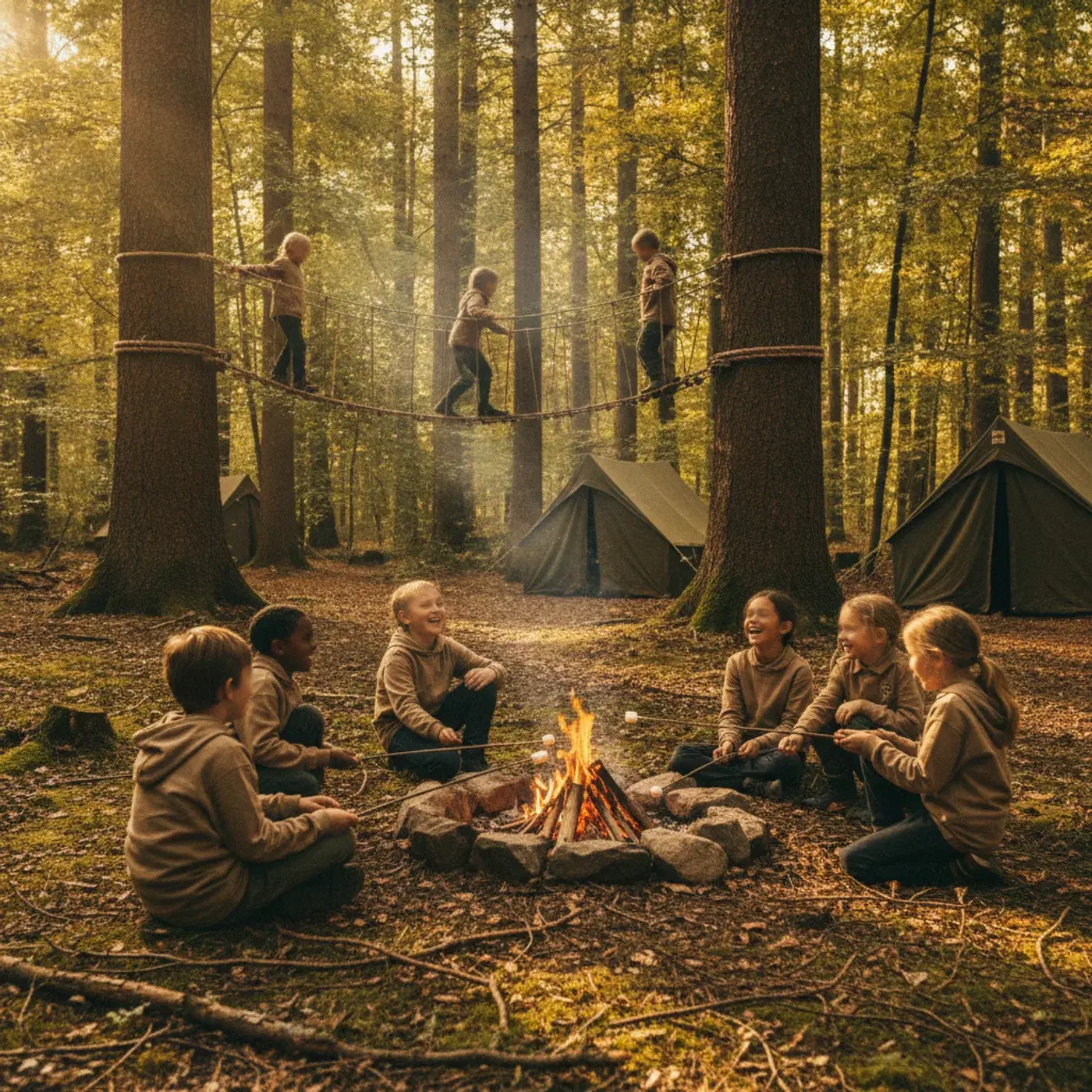
Rainbows, Brownies, Cubs and Scouts in Durham: A Parents' Guide
A parents' guide to Girlguiding and Scouting in Durham: the sections by age, the local Scout groups, how to sign your child up, what it costs, and how to volunteer.
Few activities give children quite as much as Scouting and Girlguiding: friendships, confidence, time outdoors, and the chance to try things they would never do at home, from lighting a fire to camping under canvas. Durham has a long tradition in both, with groups meeting in church halls, community centres and dedicated scout huts across the city and its surrounding villages, from Framwellgate Moor and Gilesgate to Neville's Cross and Belmont. This guide explains how it all fits together, and how to get your child a place.
A quick note before we start: Scouts and Girlguiding are two separate organisations, each with its own sections and its own way of joining. Most local groups run on the goodwill of volunteers, and popular sections often have waiting lists, so it is worth registering early rather than waiting until your child is exactly the right age.
Rainbows, Brownies and Guides (Girlguiding)
Girlguiding is the UK's leading charity for girls and young women, organised into four sections by age:
- Rainbows — ages 4 to 7. The youngest section, all about play, making friends and trying new things.
- Brownies — ages 7 to 10. Badges, crafts, games, days out and the first tastes of adventure.
- Guides — ages 10 to 14. Bigger challenges, camps, community projects and more independence.
- Rangers — ages 14 to 18. Led by the young women themselves, with travel, skills and volunteering.
Local Girlguiding units generally do not publish their meeting times openly. Instead, the quickest way to find a place is to register your interest through the official Girlguiding website, which matches you to units near your postcode and puts your daughter on the list for the right section.
Best for: Register early. Rainbows and Brownies places in Durham are in high demand, and units take girls from the waiting list as spaces come up.
Register or find a unit at girlguiding.org.uk. Girlguiding also welcomes adult volunteers, and units in the area are often short of leaders, which is frequently the thing that decides whether a unit can take more children.
Beavers, Cubs and Scouts
Scouts is open to all young people and, like Girlguiding, runs in sections by age:
- Squirrels — ages 4 to 6. The newest and youngest section, with simple games and activities.
- Beavers — ages 6 to 8. Crafts, outdoor play, days out and the first badges.
- Cubs — ages 8 to 10½. Camps, hikes, teamwork and a wide range of skills.
- Scouts — ages 10½ to 14. More ambitious adventures, from climbing to expeditions.
- Explorers — ages 14 to 18. Young people shaping their own programme, including the Duke of Edinburgh's Award.
Durham is well served for Scouting, with groups covering most parts of the city through Durham City Scouts. To the north, 1st Framwellgate Moor Scout Group meets in its own scout hut on Newcastle Terrace and runs sections from Squirrels through to Scouts. To the east, 4th Durham (Gilesgate) Scout Group meets at St Giles Church Hall and nearby Gilesgate Primary School, with sections up to Explorers. To the west, 19th Durham (Neville's Cross) Scout Group meets at Nelson Hall behind St John's Church. Other groups such as 1st Belmont and 5th Durham (Brandon) serve the villages around the city. The exact section and night will depend on where you live and where there is space.
Best for: The easiest way to find your nearest group and check availability is the Durham City Scouts group finder, which lists every group by area.
You can find local groups and register through Durham City Scouts or the national scouts.org.uk join page. Durham Scouts, the wider county body, is at durhamscouts.org.uk. The individual group websites, such as 1st Framwellgate Moor and 4th Durham (Gilesgate), are also a good place to see what each section does.
What it costs and what to expect
Both organisations are run as charities and kept deliberately affordable. Groups charge modest weekly or termly subscriptions to cover hall hire, activities and insurance, and there is a one-off cost for a uniform, which can often be bought second-hand. Camps and trips are charged separately. Many groups offer help with costs so that no child misses out, so it is always worth asking if money is a barrier.
Weekly meetings usually run for an hour or so during term time, in a local hall, with a broader programme of camps, days out and community events across the year.
Volunteering
Every one of these groups depends on adult volunteers, and it is almost always the shortage of leaders, rather than space or funding, that limits how many children they can take. You do not need any previous experience: full training and support are provided, and roles range from a regular helper on the night to occasional behind-the-scenes support. If you would like your child to have a place, becoming a volunteer is also one of the most direct ways to help the whole group take on more young people.
For more family ideas near the city, see our guides to Adventure Valley and Diggerland Durham.
Run a local group and want to be listed? Get in touch.
Local businesses mentioned
Never miss what’s on
Join the weekly Durhamcity.live digest — the best events, news and local tips, straight to your inbox. Free, one email a week.
What's On
John Kearns: Tilting At Windmills
7:30 PM · Gala Theatre, Millennium Place, Durham, DH1 1WA
Colpitts Poetry Live: Donald Jenkins and Patience Ezinwoke
7:00 PM - 9:30 PM · Redhills, Durham Miners' Hall, Flass Street, Durham, DH1 4BE
Durham Jazz Festival 2026
See booking, performance times vary · Venues across Durham city centre, including the Gala Theatre, Millennium Place, Durham, DH1 1WA